
In this post
- Trade of the week: EUR/AUD (Short)
- The Conclusion Shouldn’t Come Before the Analysis
- Quote of the Week: Equivalent bet test
- Most Traders Using Fundamentals Get This Wrong
Trade of the Week
This week’s trade was taken during one of my live stream sessions for our members.
I’ve started live streaming my morning trading sessions from Monday to Wednesday each week. I explain all my analysis and trade decisions in real-time, along with answering questions and giving feedback.
I entered this EUR/AUD short trade on Wednesday morning. The outcome was a 5.5R profit.
Market selection was based on the daily time frame. Price structure had clearly become sideways and we were testing a major high. We had already failed at it earlier in the week and there was a clear shift in activity taking place.
On the 4-hour time frame (screenshot below) the structure characteristics showed a weakening in medium-term bullish structure. We also had a triple confirmation.
We had Type 3 failures at the recent high and the longer-term confirmed trend line mapping the macro structure. We had a Type 1 close at a confirmed 127.2 for the short-term structure, indicating the possible end of the wave.
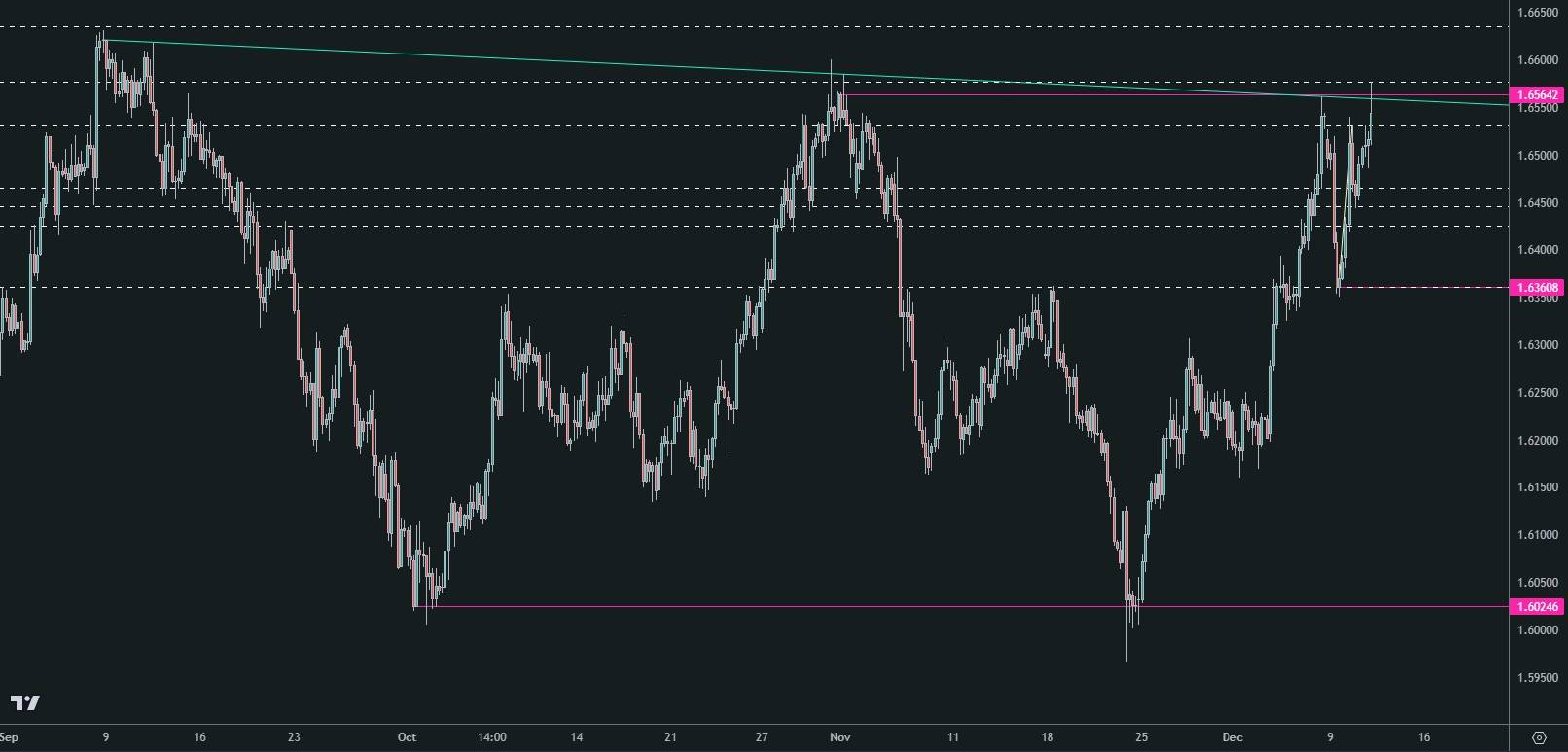
4-hour EUR/AUD
The entry came from the 1-hour time frame (my working time frame for this trade). It was based on a single confirmation failure at the more recent high, which also combined with an area of confluence from confirmed extension levels on the 15-minute time frame. TMP was the previous low on the 1-hour time frame.
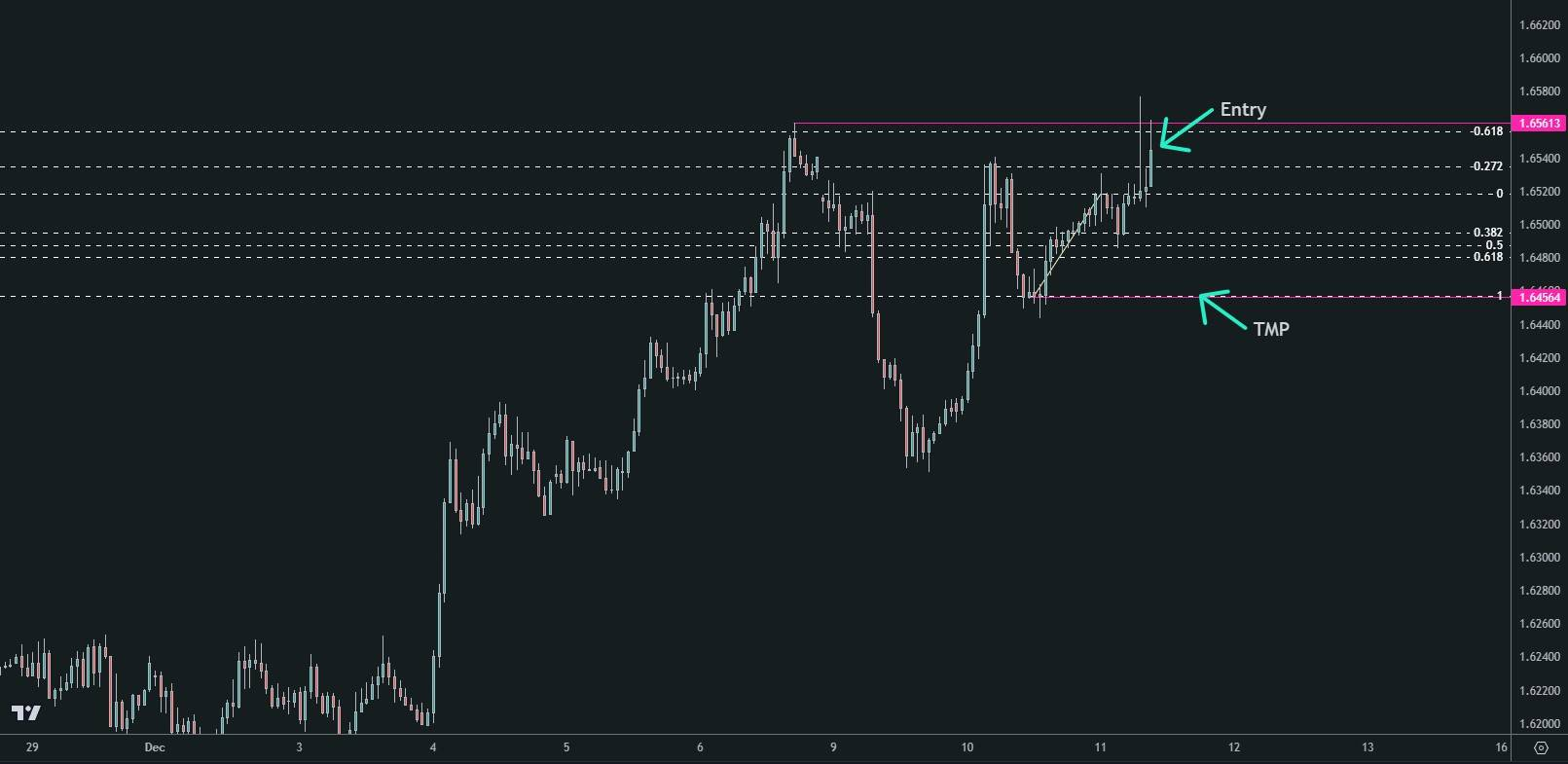
1-hour EUR/AUD
I exited after failure at the 4-hour major low, since this was a strong path of resistance and it was unclear how much further the move could go. The result was 5.5R.
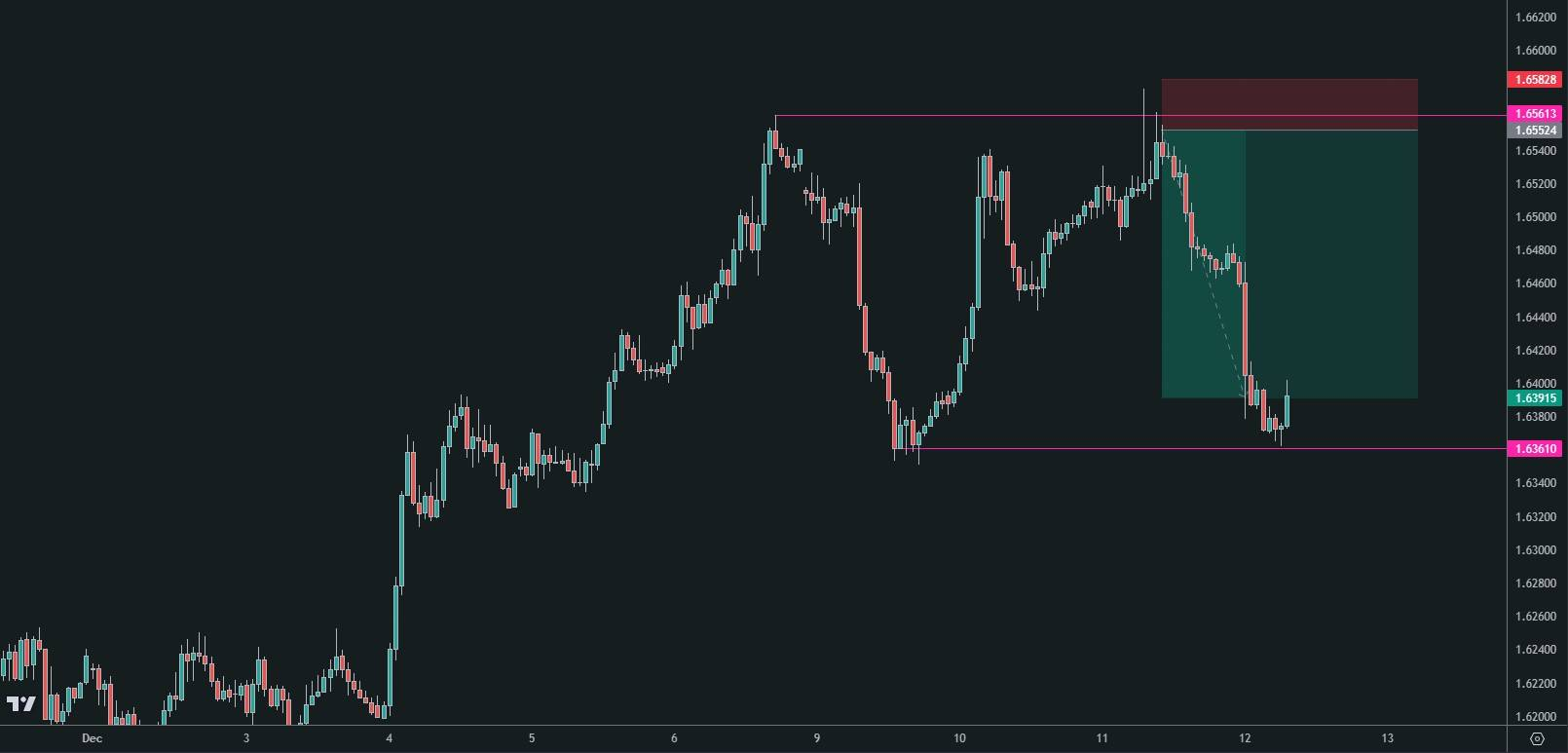
Trade exit
If you want to learn how to execute precise trades like this for yourself, check out the Duomo Trader Development Program.
The Conclusion Shouldn’t Come Before the Analysis
I’ll never forget this… Many years ago, I was heading to the cinema and bumped into a friend. During our chat, they casually dropped a spoiler about how the movie ended (a total a-hole move, right?).
From that moment, my experience of the movie completely changed. I couldn’t stop myself from searching for clues to confirm what they’d said. Every scene felt like part of the setup for the finale I knew was coming. And when something didn’t quite make sense, I found ways to rationalise it to fit my expectations.
But then, the movie took a completely different turn. The ending was nothing like what I’d been told.
So, as the credits rolled, I messaged my friend in confusion. That’s when they confessed-they’d never even seen the movie. They’d made it up just to pull my leg.
Here’s the thing: when we think we know the conclusion of something, it completely shifts how we process information. Instead of analysing objectively, we’re consumed by confirmation bias, finding ways to make the pieces fit our expectations.
I see this with traders all the time. They’ll spot a situation or pattern in the markets that looks familiar and jump straight to a conclusion.
For instance, this week, we released a short clip from a live stream where I discussed range trading. Someone commented, “In an uptrend, liquidity is then swept, short move up possibly, then a far move down.”
Now, that might be true in some cases, but it’s not a universal rule. If you start with that conclusion in mind, you’ll lose objectivity. Instead of genuinely analysing the situation, you’ll only notice the clues that align with your expectation.
Having reference points or typical conclusions can be valuable; they’re one of the benefits of gaining experience. But they should only guide your judgement once you’ve fully analysed the information.
The key is to approach the analysis process with as much objectivity as possible. Use deferred judgement, so you can make sense of the situation without letting your expectations cloud your view.
Quote of the Week
“Let’s take a fairly generic claim that a professional investor might make. They think that the US ten-year treasury yield will rise above 5% before the end of the year. That’s great, but what does it actually mean? Are they certain that this will happen? Or are they only 51% sure? The difference matters a lot, but we have no idea. How do we find out? By creating an equivalent bet, where we are certain of the odds.
We say to our forecaster. There is now $100,000 at stake. We will give you this amount of money at the end of the year if your prediction on treasury yields is right. Alternatively, we will give you the same amount of money at the same time if you can pick a blue ball from a hat containing six blue balls and four red balls. You can only choose one of the bets - the treasury yield forecast or the drawing the balls from the hat.
If they decide to delve into the hat, then we know that their confidence in their bond yield forecast is less than 60%.
We can then adjust the ball selection bet to a point at which the forecaster is ambivalent about the two options. We then have a reasonable guide to how confident they really are about their prognostications.
Not only does the equivalent bet test encourage the forecaster to think about their judgment in probabilistic terms, it also provides a far greater level of clarity about both how confident an individual is and how well-calibrated (or not) they may be.”
— Joe Wiggins, explaining the Equivalent Bet technique created by Douglas Hubbard
Most Traders Using Fundamentals Get This Wrong
You’ve probably noticed that many traders using fundamental analysis seem to believe all you need is a view about what will happen next.
Let’s say you check the economic calendar and see there’s an FOMC meeting this week. Naturally, you dig deeper to find out what the Federal Reserve might do.
After a bit of research, you discover there’s an 80% chance of the Fed cutting interest rates. You figure out what this would mean for the dollar and decide to take a trade.
Great! You’ve just used fundamentals to guide your trading… Or have you?
Here’s the issue: markets are forward-looking. If there’s an 80% expectation for a rate cut, that expectation is likely already baked into the price. In fact, those probabilities are often derived from what’s already priced in.
You often see it on social media. Someone brags, “NFP was expected to be XYZ, so I entered short and made a huge profit when the data came out.” The comments flood with admiration: “Wow, I wish I understood fundamentals like that.” Meanwhile, you’re sitting there thinking: That wasn’t skill; that was luck.
Here’s the core principle: we can assume all available information is reflected in an asset’s current price. This includes the anticipated effects of future events. You might recognise this as a foundation of the Efficient Market Hypothesis. While EMH has its flaws (as we point out with the Duomo Market Theory), this idea holds up.
Sure, people love to say, “The market’s stupid,” or, “The market’s wrong.” Occasionally, that’s true. But most of the time, it’s not the market getting it wrong-it’s the trader missing something important.
A good mindset is to assume the market’s collective IQ is incredibly high. Most of the time, it’s pricing things correctly. Research into the “wisdom of the crowd” demonstrates just how precise market pricing can be, even with limited information.
That said, remember this: the market isn’t pricing future events based on certainty-it’s pricing based on probability. This means price movements can and will occur as outcomes unfold and go from being a probability to a certainty.
Given that, there are three broad ways to find opportunities that aren’t already priced in:
- Obtain information that isn’t publicly available. (Careful, Gordon Gekko-insider trading could land you behind bars!)
- Have expertise in a relevant area that few people have. If you’re a world-class expert in a specific field, your analysis will be better than the collective understanding of the market.
- Estimate the probabilities more accurately than the market consensus.
For most traders, the third option is the most realistic. But this is only possible if you always conclude your analysis with a probability estimate.
If your probability differs from what the market has priced in-and you’re confident in your work-that’s when you’ve found a genuine opportunity.
Free Training Series
Start the free training.
Get free access to our 5-part training series. It covers the foundations of the Duomo approach, how to analyse markets logically, and the skills serious traders need to develop.