
Most avoidable trading mistakes tend to happen after a loss. That includes trades that you close as a loss, and ones that are still open with a running loss. But of those, surprisingly, the worst mistakes and poor decision-making tend to happen when the loss comes after a profitable streak or a period of great results.
When you’re already seeing bad results and have a losing streak, another loss doesn’t affect your decision-making as much. Sure, you might start experiencing learned helplessness if it’s gone on for a while, which has all kinds of negative consequences. But in general, your decision-making from one loss to another will stay pretty stable.
On the other hand, when you’ve had good results, or just closed a trade for a huge profit, it can lead to instability.
I want to share a mental reframing technique I’ve used for years to deal with exactly that, one that helps keep my decision-making stable regardless of my results. It’s actually something I naturally did without even realising it, until one day I mentioned it to someone on my team and it became a game-changer for them.
So why can good performance become destabilising?
Firstly, there are biological changes that take place. We won’t discuss these in detail for now, but as you close profitable trades, your testosterone levels rise, known as the ‘winner effect’. As a result, your level of confidence and risk tolerance increase, and eventually this can lead to hubris syndrome, where your decisions become self-destructive.
Secondly, there’s the endowment effect. This is a key concept in prospect theory, related to loss aversion, where we value items higher than they are once they become ours. So once we build up some profits, those become ‘ours’ and that changes the way we make decisions.
Thirdly, related to the second point, we start seeing an increase in profits as progress. Subconsciously, we consider the new account balance as our floor, and any subsequent trades are going to build from there. Therefore, any reduction in that account balance through taking losses is a setback rather than an expected part of trading.
The mental reframe I use to reduce these negative effects is based on changing my perspective of profits. The way we talk about our trading, either out loud or in our minds, influences the way we think and changes our behaviour.
This is why I’ve often said that I hate people calling profitable trades “wins”, because it implies a losing trade is a failure. It suggests a profitable trade means you were right, and a losing trade means you were wrong. But that’s not accurate, because trading is based on probabilities and success comes from trading positive expectancy opportunities. Without realising it, when you think of things in terms of wins and losses, it affects your ability to take a loss when you need to.
When you hear traders talking to each other after one of them closes a trade for a big profit, the discussion is often around progression towards something. They start extrapolating the results and getting excited about what this could mean for their longer-term performance.
For example, a trader closes a 6% profit during a funding challenge and realises they need just 4% to pass. They’ll start talking about how they’re just 1 or 2 trades away. (Honestly, I’ve been guilty of this one too in the past). Or a trader with a running monthly return of 8% starts thinking about how much their life will change if they manage to do that every single month.
The examples are endless. What they don’t do is factor in the expected potential losses, and this sets people up for a negative spiral. As soon as they hit a loss, it feels like a setback and they do whatever they can to either avoid taking it at all costs (loss aversion) or to recover the balance as soon as possible through revenge trading. In fact, some traders find themselves completely paralysed and stop taking trades, just to avoid ‘ruining’ their results.
If you’ve ever read Warren Buffett’s annual shareholders letters, you’ll notice a recurring theme. After a successful year with good annual performance, he’d manage his shareholders’ expectations about the next year.
From his 1997 letter:
“Our rate of progress in both investments and operations is certain to fall in the future. For anyone deploying capital, nothing recedes like success.”
From his 1989 letter:
“A drop in their prices would not disturb us at all - it might in fact work to our eventual benefit - but it would cause at least a one-year reduction in Berkshire’s net worth. We think such a reduction is almost certain in at least one of the next three years.”
From his 1985 letter:
“Our gain in net worth during the year was $613.6 million, or 48.2%. It is fitting that the visit of Halley’s Comet coincided with this percentage gain: neither will be seen again in my lifetime.”
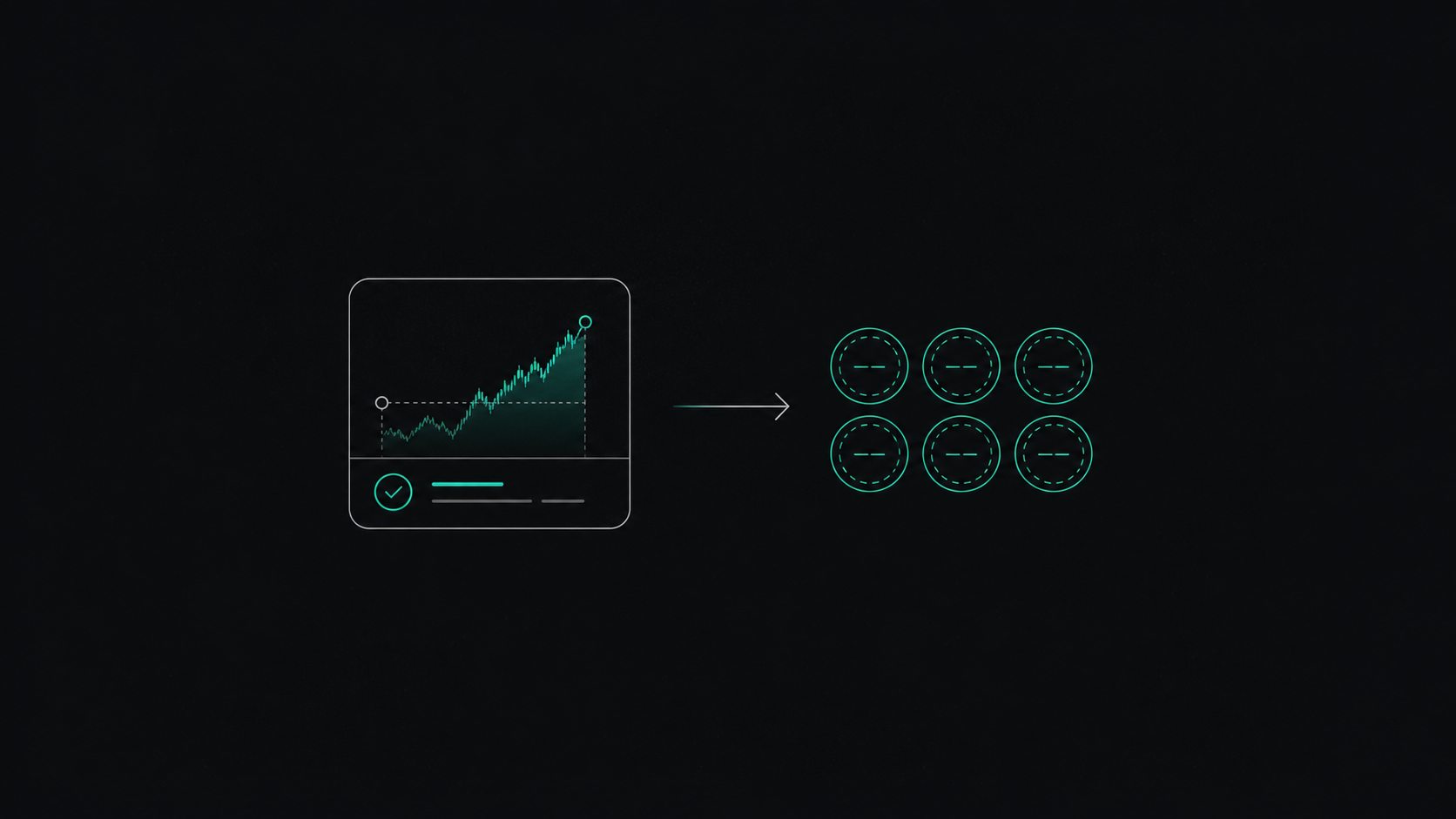
This is similar to the way I manage my own expectations with the reframing technique I didn’t realise I’d been using. When I close a big profit, I do a mental calculation. But that calculation isn’t how much money I’ll make if I continue to have that sort of performance, or anything like that. Instead, I calculate how many potential losses that profit has bought me, based on the average risk-% of my trades.
For example, if I make a 7% profit on a trade and my average risk-% is 1%, that profit gives me at least 6 additional losses. That calculation does one simple thing: it stops me from feeling like that money belongs to me. It focuses on the potential risks, rather than obsessing over the potential upside.
This also relates to advice I always give to traders who are going through a funding challenge. You should think of it as though you’re playing a game of trying to reach the 10% target, and the more capital you have, the more attempts you have to reach it. So each time you close a profitable trade during a funding challenge, don’t think about it in terms of what remaining returns you need to achieve. Think of it in terms of how many additional tokens or credits in the game you’ve just received. Then any losses stop feeling like a setback, because you just see it as using up one of your tokens.
Some people might complain that I’m manifesting failure by focusing on the downside. But believe me on this, you can follow the law of attraction as much as you want, it’s not going to change the probabilities in the markets. It’s much better to find ways to control your mindset so your decision-making stays rational and stable, than to delude yourself into going over the top of the trench and confidently running full speed into absolute catastrophe.
Free Training Series
Start the free training.
Get free access to our 5-part training series. It covers the foundations of the Duomo approach, how to analyse markets logically, and the skills serious traders need to develop.