
In this post
- Trade of the week: EUR/CAD Long
- The Issue With Trading Based on Price Structure
- Quote of the Week: Be an Insecurity Analyst
- Amateur vs. Professional Traders
Trade of the Week
We’ve seen some huge price moves this week, particularly on Friday. I’m sure many traders captured monster trades.
I wanted to show an opportunity that came from the steady state activity before Friday, rather than just identifying and riding a surge of momentum.
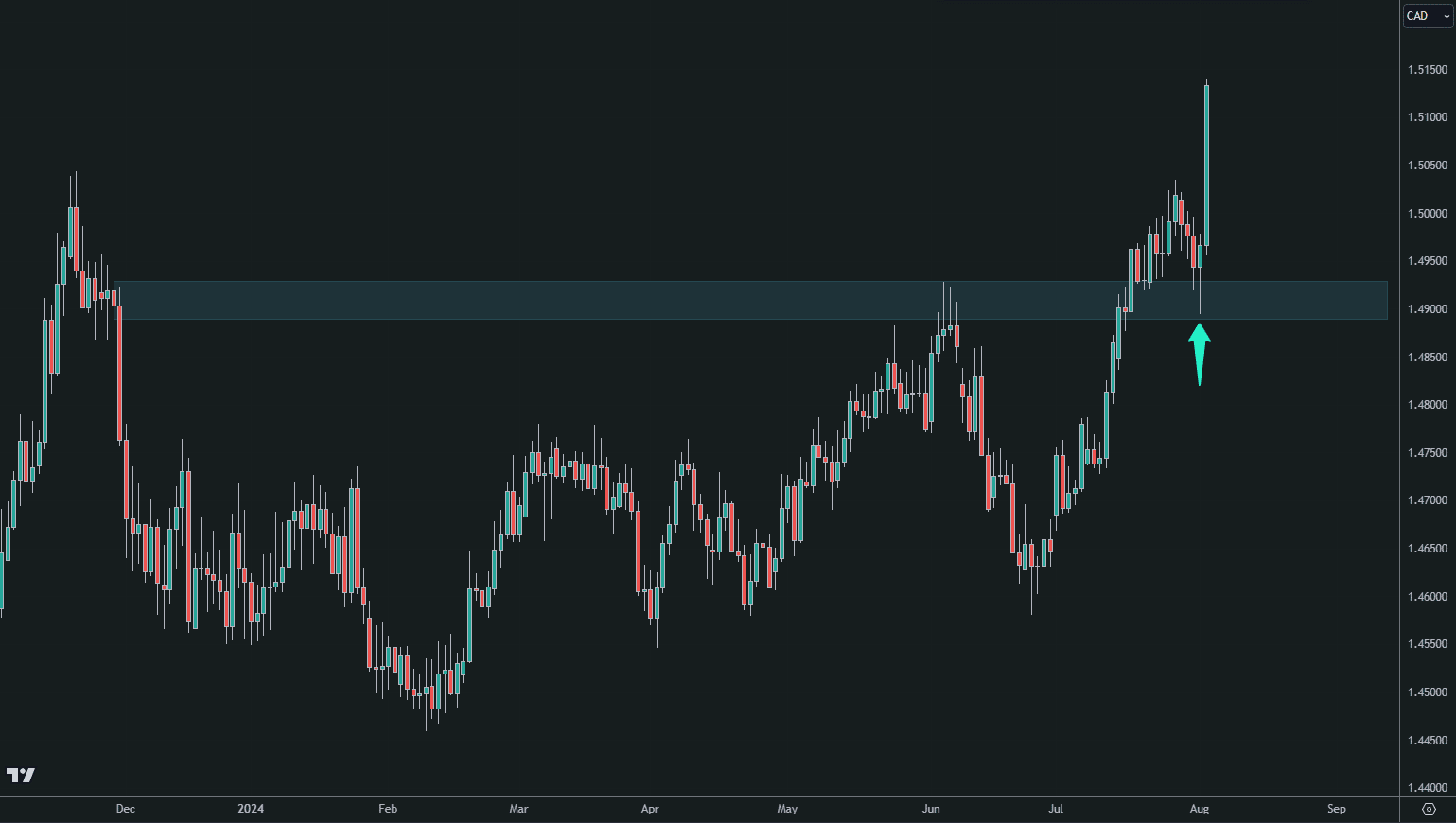
This was an opportunity for a long trade on EUR/CAD from Thursday. What followed was a 230 pip move to the upside.
The market selection was based on the daily time frame. The price was entering a highly significant zone; both strong and dependable. It had already failed there during the previous trading session.
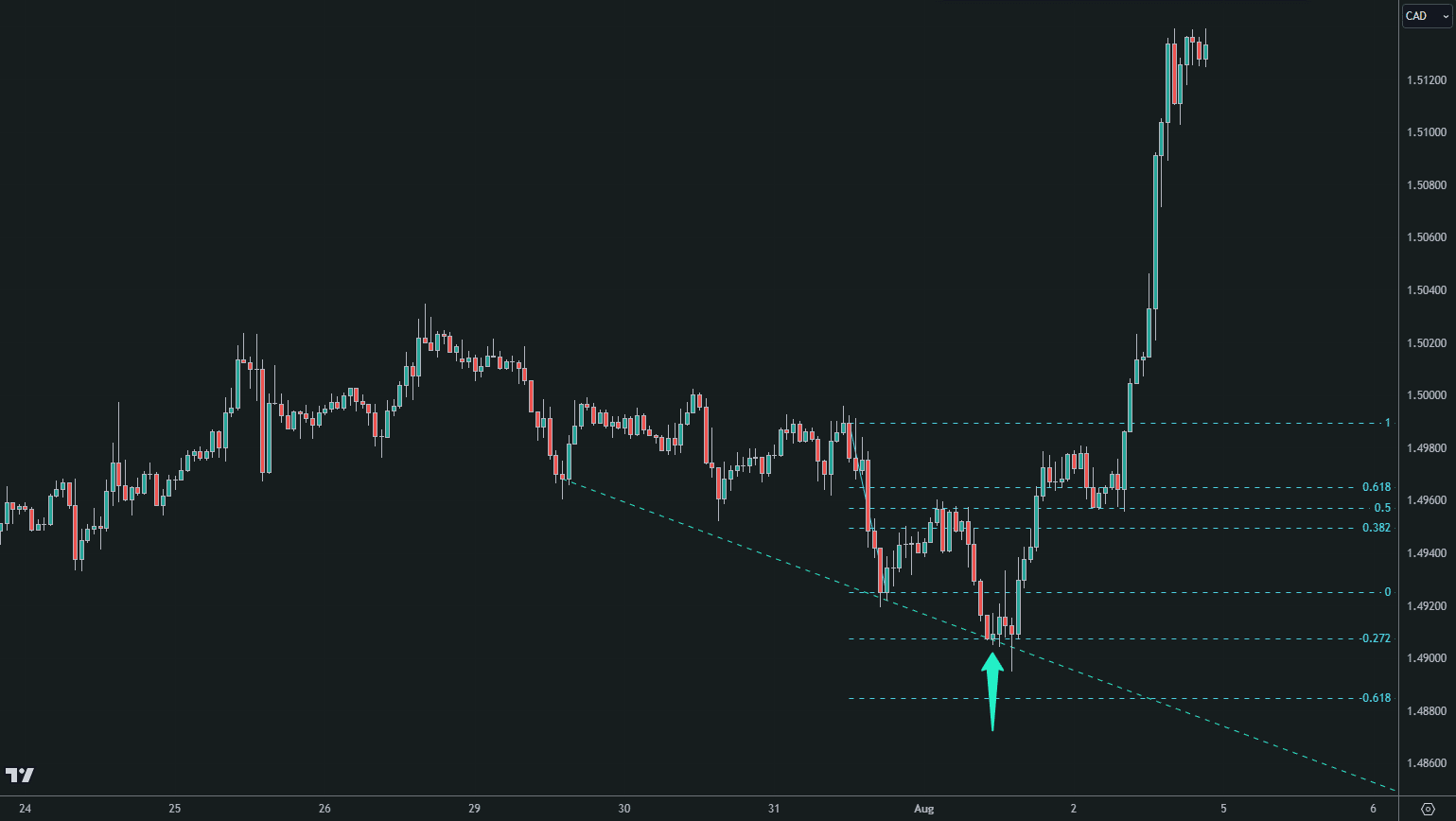
The entry was based on the 1-hour time frame. We had clear price structure showing steady state activity, with the price respecting significant levels along the way. This was important, as the higher time frames suggested there may have been high momentum that would have indicated herd activity. The lower time frames confirmed this was not the case.
The setup came from price failing at a confirmed 127.2 extension level. Not only was this confirmed at the C-point, but the B-point of the range was also a reversal at a previous confirmed range. This increases the dependability of the significant level. The unconfirmed trend line didn’t help confirm the entry, but increased the confidence level of this being a path of resistance.
If you want to start finding trades like this for yourself, check out the Duomo Trader Development Program.
The Issue With Trading Based on Price Structure
Price structure plays an important role in the Duomo Method, as it does in many other trading approaches. But there’s an issue when traders rely on it too much, or use methods where it’s the only focus.
Structure is critical for understanding the market context, but we have to remember that it’s historical information. The structure is only revealed once time has passed and changes have occurred in the market. Therefore, traders who rely solely on market structure are responding to things that have already happened.
Relying on structure gives traders confidence because it confirms that something has happened. However, the more structural information there is, the fewer opportunities there are.
Imagine in football, a midfielder has the ball and sees the striker ahead of them, ready to make a run that cuts through the defence. They don’t wait to see if the striker successfully makes the run before passing the ball; if they did, the opportunity would be gone. Instead, they sense the run might be coming and pass the ball ahead in anticipation of where the striker will be.
In trading, you have to anticipate price moves. If you wait for them to happen before you take action, you’ve usually already missed the opportunity. The skill of trading is not about identifying information that has already materialised, but about anticipating it.
This means using price structure and other information to understand the market context, but relying on logic and techniques to anticipate and detect early signs of developing price moves. By doing so, you’ll profit from emerging opportunities rather than missing out by waiting for them to be revealed.
Quote of the Week
The following is a series of quotes from what I found to be one of the most interesting and insightful sections of George Soros’ book The Alchemy of Finance:
“I think my analytical abilities are rather deficient, but I do have a very strong critical faculty. I am not a professional security analyst. I would rather call myself an insecurity analyst.”
“I recognize that I may be wrong. This makes me insecure. My sense of insecurity keeps me alert, always ready to correct my errors. I do this on two levels. On the abstract level, I have turned the belief in my own fallibility into the cornerstone of an elaborate philosophy.”
“But, being so critical, I am also quite forgiving. I couldn’t recognize my mistakes if I couldn’t forgive myself. To others, being wrong is a source of shame; to me, recognizing my mistakes is a source of pride. Once we realize that imperfect understanding is the human condition, there is no shame in being wrong, only in failing to correct our mistakes.”
“I watch whether the actual course of events corresponds to my expectations. If not, I realize that I am on the wrong track.”
“That’s what takes talent. When there is a discrepancy between my expectations and the actual course of events, it doesn’t mean that I dump my stock. I reexamine the thesis and try to establish what has gone wrong. I may adjust my thesis or I may find that there is some extraneous influence that has come into the picture. I may end up actually adding to my position rather than dumping it. But I certainly don’t stay still and I don’t ignore the discrepancy. I start a critical examination.”
“This line of reasoning leads me to look for the flaw in every investment thesis. My sense of insecurity is satisfied when I know what the flaw is. It doesn’t make me discard the thesis. Rather, I can play it with greater confidence because I know what is wrong with it while the market does not. I am ahead of the curve.”
My two cents:
Many traders crash and burn due to their reluctance to accept that their position might be wrong. As a trader, you have to embrace the uncertainty of the markets. Successful traders possess the skill of balancing the dichotomy of having conviction in their actions without being stubborn about them. As Paul Saffo famously said, you need to have “Strong convictions, weakly held.”
Amateur vs. Professional Traders
Amateurs focus on individual trade results. Professionals think about the trade’s role from the perspective of their longer-term performance.
Amateurs aim to make a profit on every trade and avoid losses at all costs. Professionals concentrate on executing their plan accurately, trusting in its long-term success regardless of individual outcomes.
As a result…
Amateurs trade as emotional wrecks since they’re trying to achieve certainty in the face of uncertainty with each trade. Professionals understand and accept the inevitable ups and downs of individual results, focusing on achieving solid overall performance.
Free Training Series
Start the free training.
Get free access to our 5-part training series. It covers the foundations of the Duomo approach, how to analyse markets logically, and the skills serious traders need to develop.