
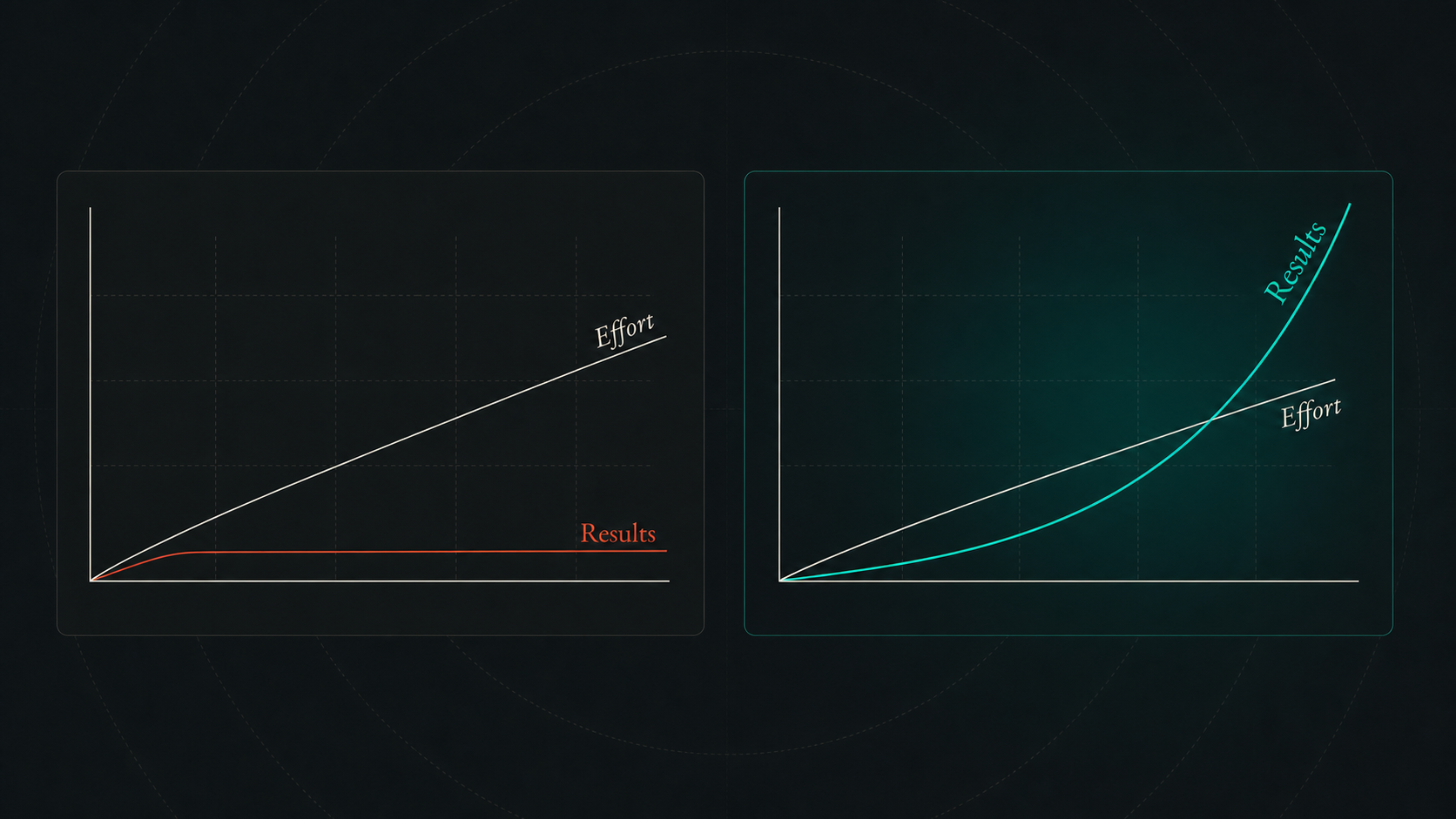
Your trading results may never consistently improve for one important reason: you’re working on things that simply don’t lead to real progress.
You rework the strategy, rebuild the routine, redesign your processes, change your rules, and gain more chart time. Labouring without progress each day, only to wake up the next morning and do it all over again.
Like Sisyphus pushing his boulder for all eternity, the Danaids condemned to forever collect water in a leaky jug, or Ocnus weaving his rope of straw while his donkey consumes it at the same rate. The work is constant but the progress is non-existent.

But you never realise the paradox you’re stuck in. The effort itself is what convinces you you’re getting somewhere. So the harder you work, the more certain you become that you’re moving in the right direction.
“Never confuse movement with action.” - Ernest Hemingway
I see it constantly. A trader hits a rough patch and re-emerges one day with this beautifully detailed plan, usually straight from a chat with AI these days. They explain the new routine they’ll follow, the prep they’ll do before each session, things they’ll focus on or avoid doing, changes to their system and trade entry criteria.
And to be completely honest, it makes me irrationally angry.
Because I’ve seen this movie before… I know how it ends.
It won’t make the difference they’re hoping for, they just waste their time doing it. It’s productive procrastination to ease the discomfort of their bad results, without actually having to face reality and do the difficult work.
But compare that to a trader who collects their trading data and uses it to identify the specific skills that need to be improved. Then they plan a structured monthly transformation cycle to work on those areas in a targeted way through deliberate practice, along with tracking measures that show whether there’s improvement. That’s a trader who’s doing what it takes to succeed.
What I’m describing is the difference between vertical and horizontal development. Once you understand these, you’ll stop mistaking motion for action and start making real, measurable improvements.
Two directions you can improve in
Imagine there’s a boxer who’s a natural athlete, he’s big, strong, and quick. When he hits an opponent, they stay hit.
But his boxing ability is limited; his footwork looks like he’s wading through mud, his defence is open, his punch technique is poor, and his combinations are basic.
There are two completely different ways he can look to improve.
He can develop his abilities as a fighter. Get coaching on his punch technique and practise it until the power comes from mechanics rather than size, drill his combinations, tighten his defence, and sharpen his footwork. He’d be developing his ability until he’s no longer just a big lad who hits hard, but a genuinely skilled boxer.
In other words, he’d be raising the ceiling on what he’s capable of. This is vertical development.
Alternatively, he can leave his actual ability exactly how it is and refine how he uses it. Build his whole plan around his size and power, pick opponents who can’t exploit his limited defence and footwork, and just keep practising the things he can already do so he gets more efficient at them.
His boxing ability isn’t improving, but he’s becoming more efficient and effective with it. This is horizontal development.
These types of development apply to all skills, and both can be valid. But it’s only vertical development that raises your actual skill level, whereas horizontal development is just making the most of what you’ve got. The ideal plan is to focus on achieving both.
The trap is when horizontal development becomes the only kind of improvement you ever do. It’s easier to work on, but it limits what you can achieve because there’s a ceiling to it. You can only work around a limitation for so long before it becomes the exact thing stopping you from progressing.
This is the exact trap most traders find themselves in, and no amount of further adjustments will improve performance. The thing that needs to change is the skill itself, but that’s the area that most traders never focus on.
What horizontal development looks like in trading
You almost certainly already do horizontal development, and it’s likely to be the thing you do more than anything else. Like most traders, you probably never thought of it as a problem because it seems like the work you’re doing is productive.
You implement parts of a new strategy you found. You add an indicator, then remove it again. You change your entry criteria, focus on a different market, rebuild your morning routine for the third time this year. Then you wait and see whether your results get better.
Part of this is a search for a silver bullet; a quick solution to success. You convince yourself you’re just one change away from things working out for you, you just need to figure out what it is.
But look at what every one of those things has in common. Not a single one involves getting better at the actual skill of trading. Each one is a rearrangement of the approach, the same ability level being directed in a slightly different way. It’s like our boxer changing his game plan for the hundredth time while his technique and ability stays exactly the same. The ceiling hasn’t changed.
You might be thinking, “hang on a sec, some of those changes have actually improved my results”. Sometimes that’s genuinely true, but most of the time it’s just a deceptive trap that keeps traders stuck doing it again and again. It’s what I call the Random Results Treadmill.
The Random Results Treadmill
Trading outcomes are probabilistic, which means small sample sizes can produce a lot of short-term variability. Those results are not always a reliable representation of longer-term performance.
A trader with no edge can have a profit streak in the short term, while a genuinely successful trader can experience short-term losses. Your short-term results can flatter you or punish you without actually meaning anything at all.
This is exactly what traps traders in the Random Results Treadmill. It’s a cycle that relies on horizontal development and small sample sizes.
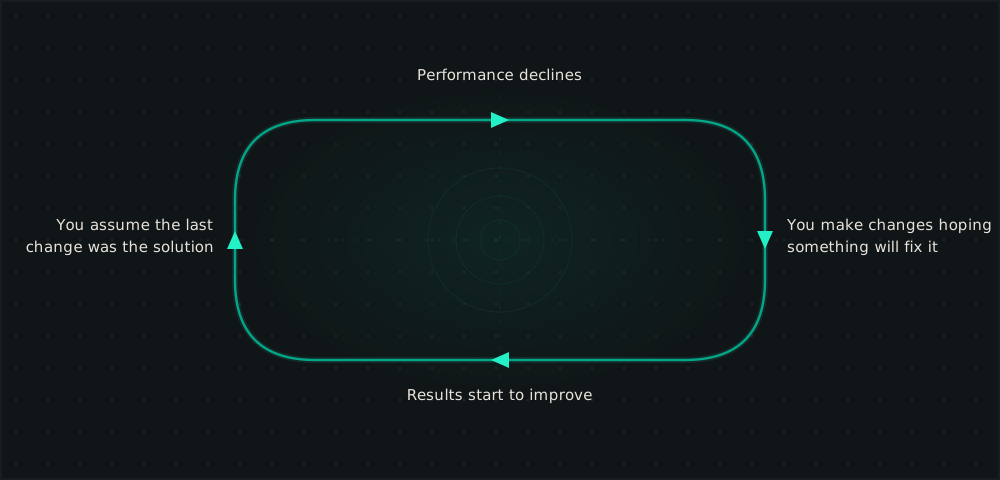
Your short-term performance isn’t looking great, so you decide you need to make some changes to try and improve things.
You start thinking about what things can be changed, maybe directed by the similarities you’ve found between your losing trades that you assume must indicate a shared root cause.
Eventually, your performance starts to improve, so you conclude that whatever you last changed must have done the trick. You found the problem and fixed it.
In reality, the better short-term results aren’t a reflection of a longer-term improvement. They’re just the expected variability of a small sample size. So, before long, your results start to decline again and you go in search of the next thing to change. And around and around you go, rinse and repeat. A cycle of horizontal development that never addresses the real root cause.
It’s a treadmill. You’re working hard and constantly moving, but progressing absolutely nowhere.
Not only do you see this happening constantly with most traders, but it’s also perpetuated by the usual advice given throughout the trading education industry.
So why doesn’t everyone just work vertically instead?
The most common reason is that you simply don’t know the skills successful trading depends on. Almost nobody out there is teaching you them, because they don’t know them either.
You’ve been told relentlessly from day one that success in trading comes from figuring out the right strategy and having the discipline to stick with it. So when you’re still not making money consistently, the strategy is the thing you focus on. It’s the only lever anyone ever told you to pull.
But think about this… If I asked you whether you believe a perfect holy grail trading strategy exists, you’d probably say no. Most traders aren’t naive enough to believe there’s a magic setup that just prints money over time. Yet the things most traders actually spend their time learning and changing tell a different story.
What the skills actually are
So if the strategy was never the real skill, what is?
Real trading is all about forecasting the financial markets and making decisions that express that forecast in a logical way. That can be broken down into a handful of distinct abilities:
-
You analyse the markets to understand and interpret context. Not just spotting a pattern or waiting for a pre-defined sequence of price action, but understanding and interpreting what’s actually happening in the market and coming to a logical conclusion about it.
-
You anticipate the future potential outcomes, future context, that could realistically occur from the current possible scenarios, current context, and estimate the probabilities of them happening.
-
Using the potential outcomes and probabilities, you assess the expectancy to see whether you actually have an edge. In other words, whether there’s an opportunity with positive expectancy.
-
You plan a strategy that expresses the unique context and potential outcomes coherently. This means your current actions and planned future actions reflect the analysis, rather than contradicting it.
-
Then you execute in line with all of that. Not in line with whatever feeling arises in the moment as you react to the price moves unfolding.
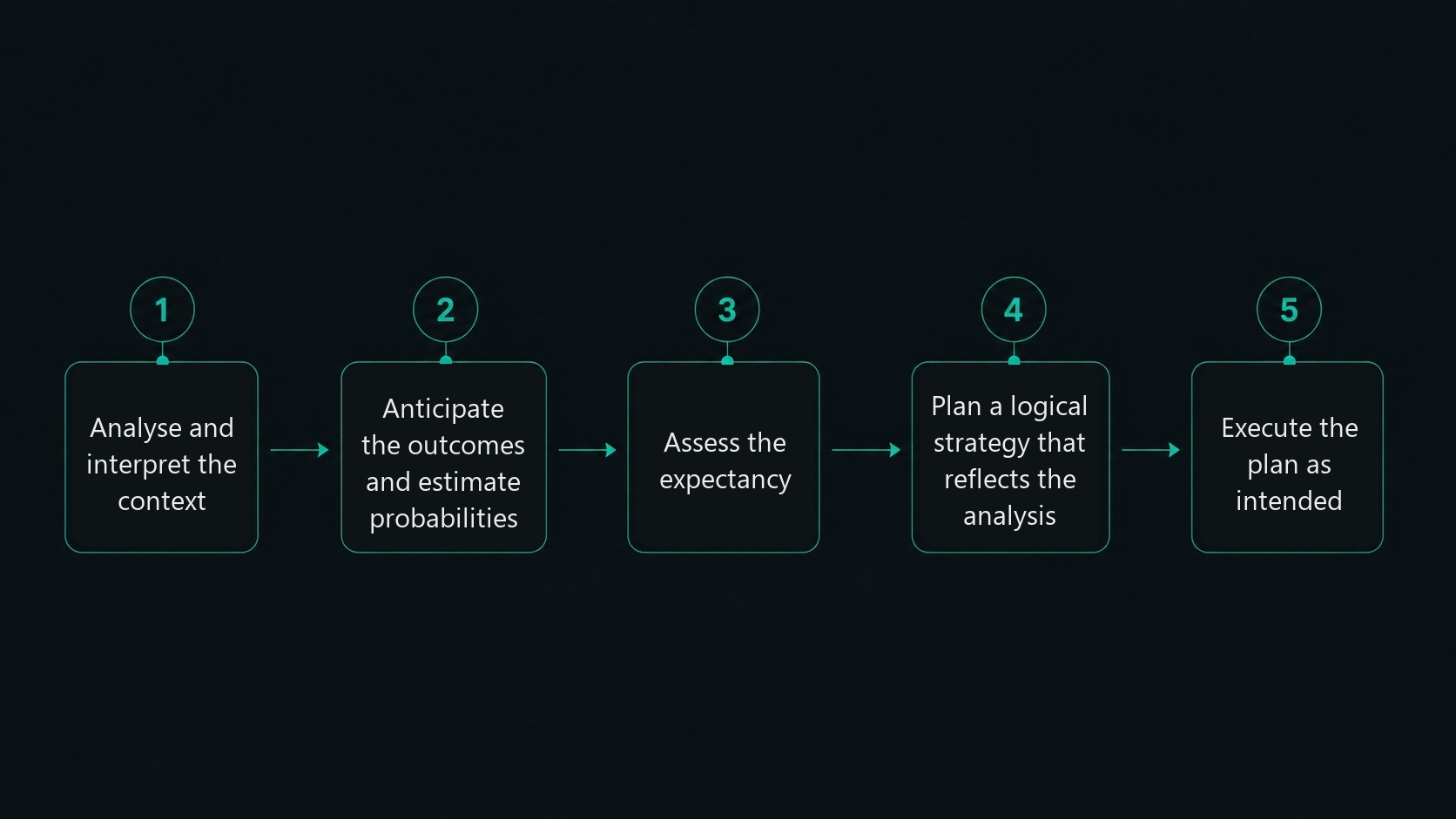
Those are the broad skills, and within each of them there are many subsets of skills that make up the full complex skillset. Each skill is something you can be objectively better or worse at, and they can all be practised, measured, and improved.
But right now, you’re probably not doing those things. Maybe just in some areas, but if we’re being honest, most likely not in any of them.
However, by identifying the right skills and then practising, measuring, and developing them, you can start to raise your overall ability ceiling. You can start achieving vertical development instead of wasting time with endless horizontal, hoping it leads to the sort of progress it simply can’t do.
How to improve vertically
There’s an important principle in skill development: you can’t fix what you can’t see.
Imagine a basketball player trying to improve their free throws in a pitch black room. They’re going through the repetitions, but they can’t see where the shots are going. They don’t know which part of their shot mechanics they actually need to adapt. So they can do as many repetitions as they want, but not a single one will contribute anything to their ability level.
That’s precisely how most traders work on their trading. They’re making changes in the dark and hoping for the best.
Imagine how different things would be if you identified real problem areas within the skillset, knew specifically how they needed to improve, and measured their individual progress over time.
This is what our approach at Duomo achieves. We’ve put together an entire operating system for traders, called the Cohesion Trading Model, or CTM. It shows how all aspects of trading, everything from your analysis, system, strategies, trade management, psychology, and optimisation, are completely interconnected. Every part has knock-on effects, positive or negative, on the parts upstream and downstream of it.
People hear “model” and picture a strategy or a rigid set of rules. It’s the opposite of that. It’s a connected system of feedback loops. CTM is made up of one overall feedback loop for your trading as a whole, and nested inside it are lots of smaller feedback loops for each of the individual skills. When you follow them correctly, your progress as a trader becomes inevitable, because you go through genuine vertical development. Then, since you’re raising your ability ceiling, you can implement horizontal development to maximise how it’s used.
When you see trading this way, the first thing you realise is that there’s an optimal way of doing everything. A way that leads to positive knock-on effects in all areas of your trading, instead of the negative symptoms most traders see emerging everywhere.
If you want to understand how this all works, I walk through a simplified version of it in our free training series that you can start implementing immediately. It shows you what successful trading really involves, the skills it relies on, how to develop those skills, and how to benefit from the flywheel effect that the CTM provides. You can find the free training here.
But in the meantime, each time you’re working on your trading, I want you to answer honestly whether it’s horizontal or vertical development. Or, in some cases, it might not even be development at all, for example if you’re just doing the same things over and over expecting improvements.
In general, if it’s genuinely vertical development, it’s going to fall into one of three categories:
1. Calibration
Calibration means comparing your estimated probabilities against what actually happened across a large sample size, and using it to improve your accuracy. This is the most objective measure of how good your analysis skill is, but you can only measure it and improve if you’re making your estimates explicitly and tracking them.
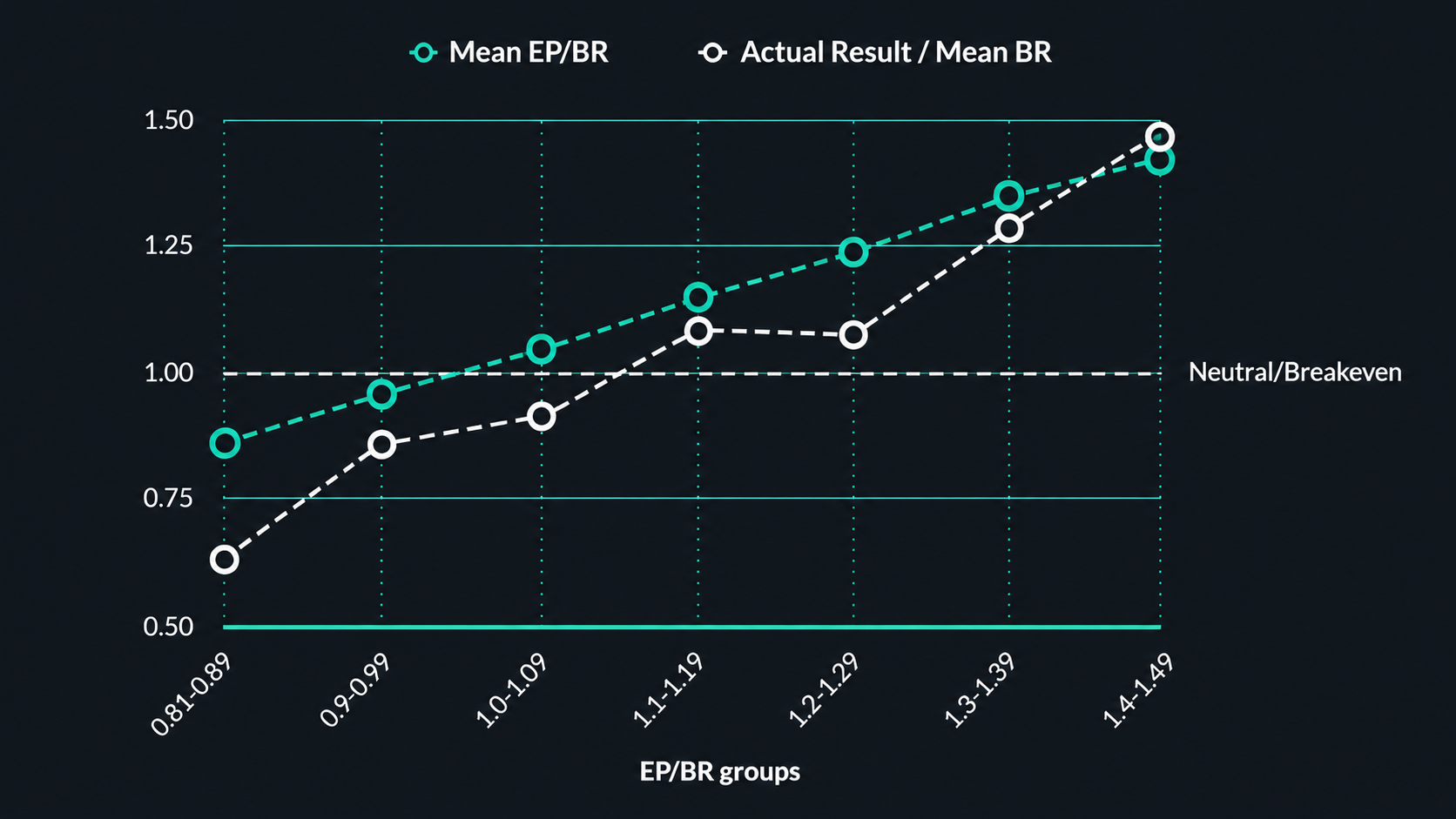
If you’re thinking you can’t possibly estimate probabilities, the fact is, you already are. Every trade you take is a probability estimate, whether you realise it or not. With each trade, you’re making an implicit statement that the profitable outcome is more likely than the base rate. If you still have doubts, watch this video where I address it in detail.
This isn’t unique to trading. It’s how forecasting is improved in every serious field. Philip Tetlock’s Good Judgment Project found that the best forecasters in the world weren’t necessarily smarter than everyone else. They were better calibrated, and they got that way by making explicit probability estimates, assessing their accuracy against what happened, and adjusting.
The process you need to follow is explained in our free training series, or in this video about measuring and improving your trading edge.
2. Purposeful or Deliberate Practice
Anders Ericsson spent his career studying how people reach genuine expertise, and his central finding was that it doesn’t come from experience or repetition. It comes from a particular kind of practice. There are broadly three types of practice:
Ordinary practice is just going through the motions. Turning up, repeating what you can already do, and racking up the hours. Like traders aimlessly building up screen time and hoping it will improve their performance.
Purposeful practice is the minimum that actually builds skill. A clear and specific goal for the session, full focus while you work, a difficulty that pushes you past your comfort zone so you’re forced to adapt, and feedback after each attempt so you can correct.
Deliberate practice goes further, adding expert coaching to diagnose your sticking points and design ways past them.
Now be honest about how you practise trading. For most traders it’s pure ordinary practice: hours of passive screen time, watching the charts, doing the same things each day, because they’ve been told the best way to learn to trade is just by trading.
Ordinary practice is exactly what Ericsson found does not produce improvement. Once a skill becomes competent it goes automatic, and the moment it does, improvement stops. You settle at “good enough” and plateau there, often for years.
But there’s an important test embedded in this that you should think about.
Take each element of your trading approach and question: can this genuinely be developed through purposeful practice? Can you set a clear goal for it, be pushed beyond your current ability, and get real feedback on whether you’re improving?
For genuine skills, like those that contribute to analysing and interpreting market context, or planning logical strategies for each unique situation, the answer is yes. But for a lot of what most traders are told to focus on, like pre-defined strategies, the answer is no. It’s just spotting a pattern or particular sequence of price action, plotting a level, or noticing a specific setup. Mechanical actions you can perform but never actually get better at once you know how to do them, because there’s no real skill involved.
3. Addressing Execution Mistakes
The final category is to work on fixing recurring mistakes. This starts with finding which of three things is actually behind it, because each has a different fix.
The first is that it isn’t an execution problem at all, but a skill gap that needs to be worked on. If you keep failing to act correctly, it may be that the underlying skill simply isn’t developed enough. In which case, you’re back to the previous category, and the answer is purposeful or deliberate practice until the right action is automatic.
The second is that you’re consistently overlooking or forgetting to do something. It’s not that there’s a skill gap, but simply that there are many things you need to keep in mind and it’s easy to miss some. The work here is to create processes and checklists that ensure the right action becomes the default one, and the wrong actions are less likely to occur. This is horizontal development, but with the intention of fixing a mistake that’s limiting vertical development.
The third is a genuine psychology issue. But you have to be careful with this category, as most of the common trading psychology issues are symptoms rather than root cause problems. They’re caused by underdeveloped skill or not relying on the right skills at all, for example, using a pre-defined trading strategy. The hesitation, anxiety, revenge trading, cutting profits too early, almost all of it relates back to having no real edge, or deviating from the elements of the Cohesion Trading Model. So treat psychology as the last solution you go for, not the first.
But for the issues that genuinely are psychological, the reliable way to work on them is the same as everything else… stop guessing and collect data. An ABCDE journal is a good way to gather the information you’re going to need to properly diagnose the issue and put together a plan to deal with the root cause.
This means, every time you notice the psychological issue impacting your behaviour, you take note of:
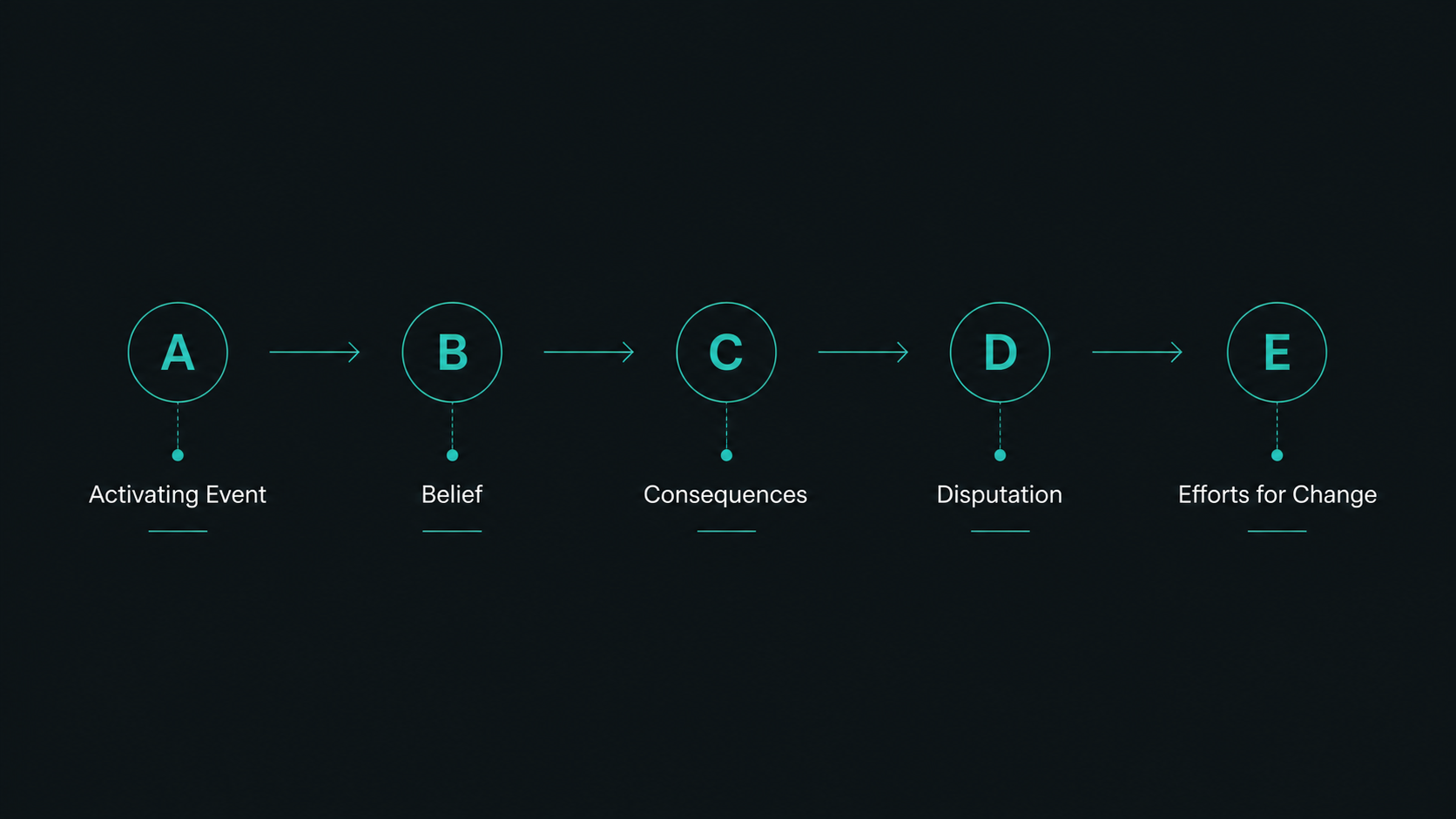
A: The activating event that set it off
B: The belief it triggered
C: The consequence that followed
D: Then you dispute that belief and give the opposing view
E: And decide on a logical effort for change
If you do this consistently, it becomes a genuine data source and helps you to recognise the patterns in your behaviour so you can plan the correct actions to solve them.
The changes you need to make
Now that you understand the difference between vertical and horizontal development, take a look at what you see throughout the trading industry. What are the things most traders are obsessed with? And how have you been spending most of your time up until now?
Have you genuinely been taking actions that raise the ceiling of your ability level, or just looking for horizontal changes and hoping for the best?
I hope this article has made it clear that if you really want to progress as a trader, you need to stop thinking about improvement in terms of finding a better strategy or process. Instead, start thinking about becoming a better trader.
That’s the real difference between traders who continue to progress year after year, and those who waste their time and effort while their results go absolutely nowhere. It’s not necessarily about how hard they work, it’s the direction they’re working in.
Just a reminder, if you want to start learning what the skills actually are and how to start developing them, that’s exactly what our free training series walks you through. I’ll teach you my logical approach to trading, and explain how the Cohesion Trading Model makes continuous improvements inevitable.
Free Training Series
Start the free training.
Get free access to our 5-part training series. It covers the foundations of the Duomo approach, how to analyse markets logically, and the skills serious traders need to develop.